
I’ve been thinking about my history with feminism recently, in part because I am currently reading—as part of the virtual book club hosted by the Catholic Theological Society of America (CTSA)—Julie Rubio’s Can You Be a Catholic and a Feminist? (Oxford University Press, 2024). One of the things I mentioned at our first book club meeting of this book was my own complicated history with feminism when it came to theology. When I first started studying theology, I didn’t consider—and didn’t want to consider—questions related to feminism, despite that I now identify myself as a feminist historical theologian.
I first thought about my own history with feminism a few years ago when I was at a Wabash event. I referenced this previously in my post as part of our WIT series on what “haunts” us in our work in theology. There, I met a fellow theologian who had a lot of background in common with me—we both had been undergrads at Georgetown, we both had double majored in French and theology, we both had studied abroad in Strasbourg, France, and the list went on. She, however, was about ten years younger than me and what struck me in our conversation was her comment that she had always been a feminist.
I, on the other hand, had not.
I should clarify—of course I had always believed in the equality of men and women and that women should be allowed to choose whatever career path was open to them. I didn’t think this was even a question. But I didn’t consider this feminism. And when it came to theology specifically, I didn’t want to be another woman who only wrote about women. I wanted to be one of the guys! In my senior seminar, I remember there being about eight students total and I think there was only one other female student. My graduating class has produced a (surprisingly?) substantial number of theologians—J. Patrick Hornbeck, Steve Okey, Heath Carter, and myself (at least that I’m aware of—and that doesn’t count those in the years above and below us). And other than me, what all those other theologians from my year have in common is that they are all male. So, in a sense, who can blame me for wanting to not identify as a feminist and to not write about women’s issues? I just wanted to fit in.
What is interesting is how different my experience seems from those who came both before and after me. Julie Rubio begins the introduction to her book with a brief autobiographical reflection. Her college experience occurred about twenty years before me and she notes, “I grew up thinking girls could be whatever they wanted to be. In college, when I began to call myself a feminist, my faith only grew stronger” (Rubio, p. 1). While I can relate to the first sentence there, the second is foreign to me. I distinctly did not want to be known as a feminist when I was in college.
Rubio wrote this book to argue that, yes, you can be a Catholic and a feminist, but it is necessary to cultivate a distinctly Catholic way of being a feminist. Part of her motivation was in the changes that she saw between her own experience in college and graduate school, and the way that she has seen Catholics relating to feminism more recently. She wrote early in the book, “But over the nearly three decades that I have been a Catholic theologian, Catholic feminism has seemed to be slowly slipping away. For friends, family, students, and Catholics I encounter in parishes, universities, and conferences, embracing a Catholic feminist identity seems less possible” (Rubio, p. 2). Part of this difficulty that she has observed comes from the wider culture, which has implicitly been teaching women for some time now that their value is as “objects of sexual conquest and pleasing helpmates, who always put other people’s needs before their own” (Caryn D. Riswold, “Vocational Discernment: A Pedagogy of Humanization,” in At This Time and In This Place: Vocation and Higher Education, ed. by David S. Cunningham (Oxford University Press, 2016), p. 84–85).
What really connected these things in my mind was when I listened to the audiobook version of Sophie Gilbert’s Girl on Girl: How Pop Culture Turned a Generation of Women Against Themselves (Penguin Press, 2025). To be honest, I probably would never have discovered this book were it not for my desire to get the “Her Story” achievement on Goodreads, but I picked it because of the combination of the topic seeming interesting and the audiobook being available from my library. While I do feel like the book started to get a bit repetitive in later chapters as Gilbert looks at different forms of popular culture, her overall point is that popular culture has an influence on how we see ourselves, and I would agree with that. For women and girls, this has been particularly damaging.
The introduction of her book opens with three pop culture moments from 1999—the year Gilbert turned sixteen and the year that I graduated from high school—a risqué picture of Britney Spears on the cover of Rolling Stone, the projection of a naked image of the television presenter Gail Porter onto the Houses of Parliament in London as a “joke,” and the release of the film American Beauty. While her analysis of these in relation to views of women appears in the text, she comments that this was not apparent to her at sixteen. Instead, she notes “What was obvious to me was that power, for women, was sexual in nature. There was no other kind, or none worth having. More crucially, the kind of power being fetishized in popular culture on the cusp of the twenty-first century wasn’t the sort you accrue over a lifetime, in the manner of education or money or professional experience” (Gilbert, p. x). As she clarifies later:
There was a moment at the beginning of the twenty-first century when feminism felt just as nebulous and inert, squashed by a cultural explosion of jokey extremity and technicolor objectification. This was the environment that millennial women were raised in. It informed how we felt about ourselves, how we saw each other, and what we understood women as a collective to be capable of. It colored our ambitions, our sense of self, our relationships, our bodies, our work, and our art. (Gilbert, p. xii)
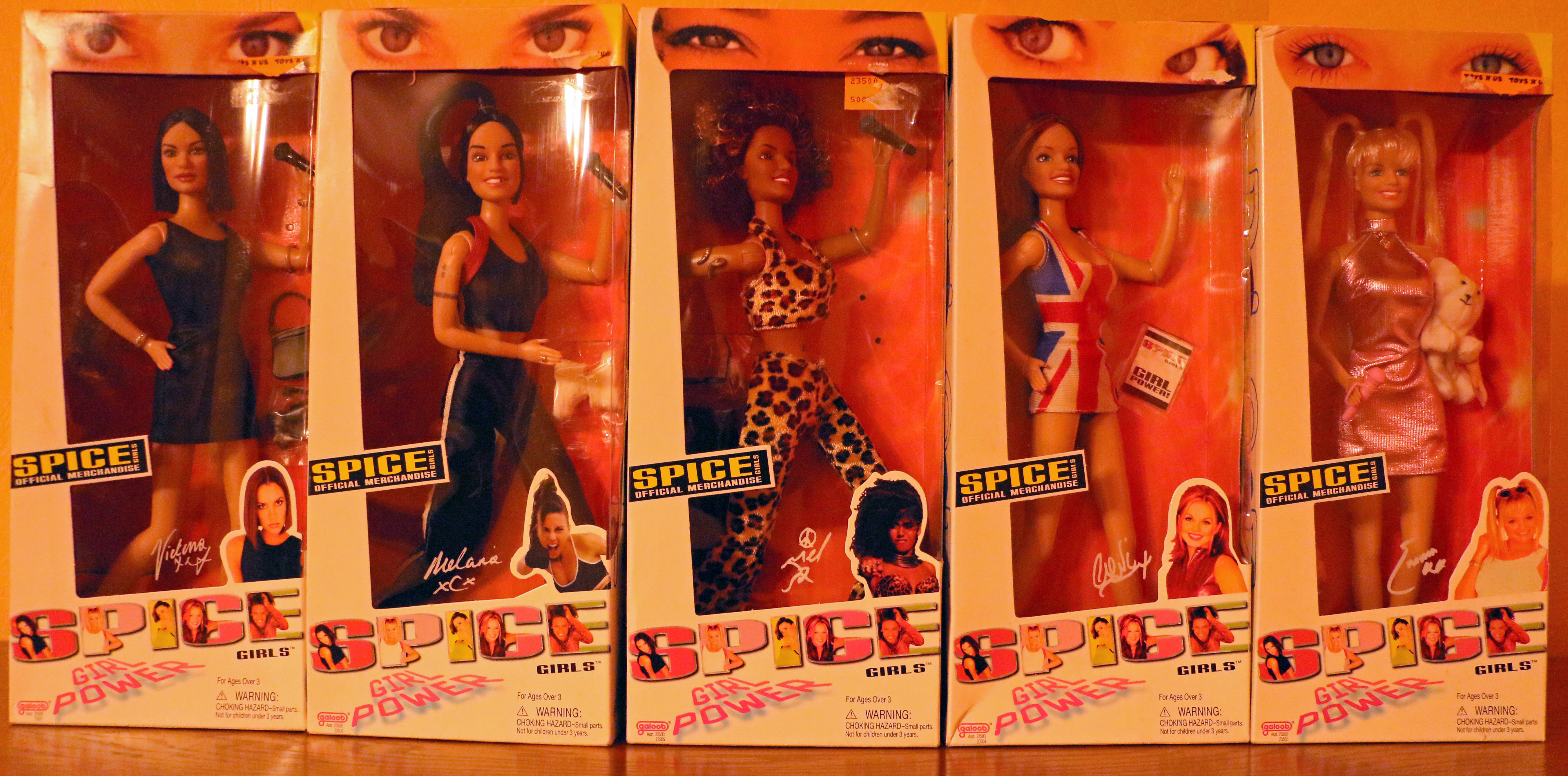
Gilbert contextualizes her study of popular culture in the “postfeminism” that arose in the 1980s and 1990s. Already in the 1980s, women were distancing themselves from the concept of feminism, as I had later done. Gilbert identifies these postfeminist ideals as appearing in 1990s popular culture, from the Spice Girls to Sex and the City to Bridget Jones’s Diary. A big factor in this is pornography, which spread into “regular” popular culture—music videos, beauty standards, movies, etc. Pornography “has trained a good amount of our popular culture… to see women as objects—as things to silence, retrain, fetichize, or brutalize. And it’s helped train women too. In a 2013 study, the social psychologist Rachel M. Calogero found that the more women were prone to self-objectification—the defining message of postfeminism and porn alike—the less inclined they were toward activism and the pursuit of social justice” (Gilbert, p. xviii). In the second chapter she focuses on this influence of pornography, noting the influence also on the way that clothing was advertised. That is, everything in popular culture, down to the very clothes that we were being encouraged to buy, was portrayed in such a way that encouraged women to see themselves primarily as sex objects, not as strong women who would want to raise their voices as feminists to fight for social justice and equality.
Now, having listened to this book and, in the process, thought back on my own experiences with popular culture at the time, and how they influenced the choices that I made—how my friends and I would dress when going out on the weekends in college, etc.—I find it more surprising that anyone came through that era thinking of themselves as a feminist than the fact that I refused to consider myself one.
My feminist awakening came slowly, and I don’t know if I can really point to a specific instance that changed my perspective. That said, I can identify some moments that changed my mind slowly. When I finished my master’s program, I was still insistent on working on male figures. I had written my M.A. thesis analyzing Antoine Arnauld’s early texts in relation to Jansenism and Gallicanism (inspired in part by a footnote I despise in Dale Van Kley’s The Religious Origins of the French Revolution that conflates Jansenism and Gallicanism). I toyed with the idea of a dissertation on Arnauld and Jacques-Bénigne Bossuet. The questions I was focusing on were related to ecclesiology and how we define heresy. I’m looking back at my notes from my first few years of my doctoral program and even two years into the program, I was still venturing to work on Arnauld and Bossuet. In the spring of my second year, I had an opportunity to do a reading course on Jansenism with Francis Nichols before he retired. My notes from that course do not indicate the why in my shift away from Arnauld and Bossuet toward the Port-Royal nuns, but it clearly happened over the period of this reading course. Part of my motivation was (and still is) that the male figures of the Jansenist movement have been very well studied, but the scholarship on the nuns of Port-Royal represented a small field so there was more of an opportunity to contribute.
I’ve written about the gender disparity in the department at the time before, and in that post I mentioned one incident that happened that has really stuck with me since then. It occurred during a seminar on Jonathan Edwards that many of us were taking, but I was, as per usual, the only female student in the class. One of my good friends in the program interrupted and talked over me when I was trying to make a point and everything in the class just continued as if nothing had happened. I remember becoming very quiet for the rest of the class that day. Now, I don’t hold anything against this person for what happened, because he probably didn’t do it on purpose. But I will note that all of us had grown up in the same cultural context that Gilbert analyzes in her book—the cultural context that taught that women should be passive and quiet. We had all absorbed the same cultural messages, and this appeared in this other student’s talking over me and my self-silencing in response.
The real mental shift for me I think I would have to identify as coming from my dissertation. In some ways, I do really like the argument that I made in my dissertation. I used dictionary definitions from seventeenth-century France to argue that we should consider Mother Angélique a theologian. You can see a preview of that argument here and an expanded version in my chapter, “Théologienne, Théologien, Theologian? Feminist Historical Theology from Angélique Arnauld to Mary Daly,” that is part of our book, Women and Public Theology: Emerging Voices (Paulist Press, 2024). By the end of my dissertation, however, I was mad at the argument that I was making. As I commented to several people at the CTSA annual convention this year, you could pick any male figure who was writing works primarily of spirituality in seventeenth-century France—Francis de Sales, for example—and nobody would doubt his qualifications as a theologian or his works as theological sources. But I had to make that argument for a similar female figure from the same period, and that just pissed me off. Why do we assume that women are not writing theology, when we do so for men who are writing similar works?
So today, despite the culture of my upbringing telling me that feminism was no longer necessary, I look at the world today and find that it is more necessary than ever. Gilbert also does this in her introduction; she talks about the way that the messages of popular culture of the early 2020s felt eerily similar to the 1990s and 2000s. Now that I’m older, perhaps, I see these messages and I cringe at instead of absorbing the messages for girls today. That is why I now do identify myself specifically as a feminist historical theologian—and this is despite all the male professors that I’ve had over the years, with very few women as role models. I had to find my own way to feminism, rebelling, in a sense, against my cultural experience growing up.
So, I would ask my readers this question as well: What is your own personal history with feminism? Did you always consider yourself a feminist? Why or why not? (And relevant to this, when did you grow up and what was feminism like—or portrayed like—during that time?)
Image by Rémy Ryan Robert, CC BY-SA 4.0, via Wikimedia Commons

Leave a Reply