
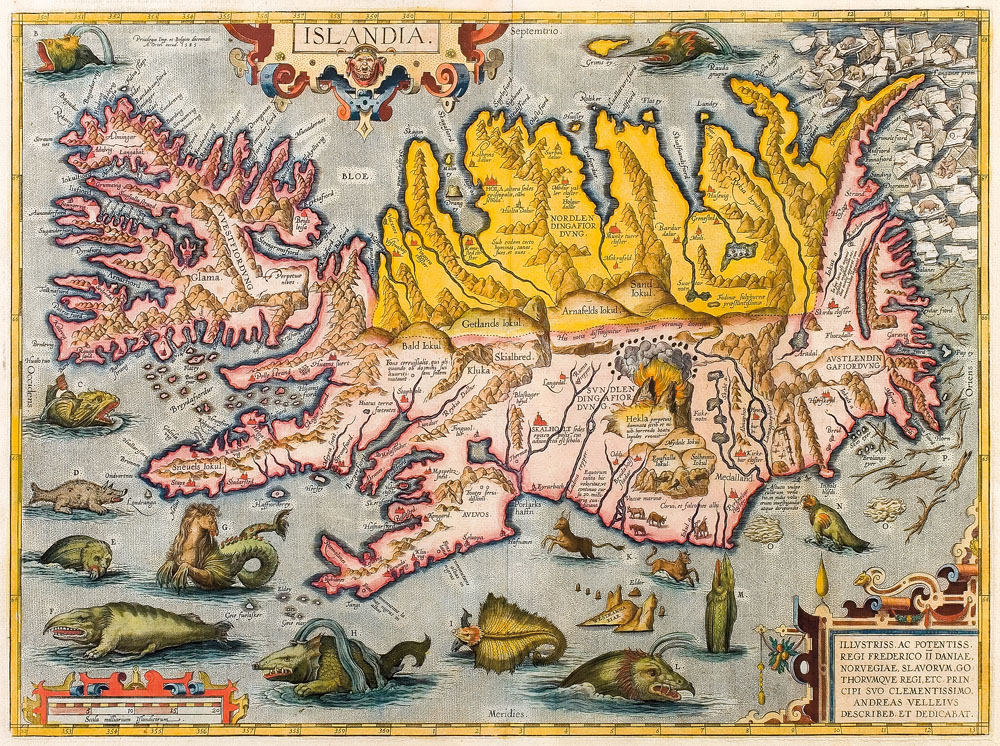
When I was younger, my mom loved taking us on summer road trips. Once we picked a destination, we’d log into the computer, and enter our starting point and endpoint into MapQuest (there’s a throwback!). Then we’d print out a set of turn-by-turn directions—hoping we wouldn’t miss an exit along the way.
I remember one trip in particular when the directions led us face-to-face with a big orange “Road Closed” sign. We turned the car around in frustration and drove 20 miles in the opposite direction on the two-lane country road to the last gas station that we’d passed. We went inside and the person working gave us a new map that showed us a way around the road closure.
We needed something more than our printed map.
We needed additional guidance in order to get where we wanted to be.
Sometimes, when I read the Bible, I feel a similar tension.
It’s as if I’m holding a beloved but outdated map—holy, treasured, and trustworthy in so many ways, but not always lining up with the complex world in front of me.
And, if I’m being completely honest, I believe that our rigidly literal interpretations and unquestioning adherence to traditional interpretations of The Bible are leaving many of the followers of Christ (and would-be followers of Christ) at a dead end.
Take, for an example, the issue of gender and sexuality. The Bible says that God created “man and woman.” But our growing understanding of human identity is broader and more nuanced than this. Our old frameworks don’t fully honor the image of God reflected in all people. When we continue to push old ideas into a modern world we are left with:
- Telling people that we understand them better than they understand themselves.
This undermines people’s lived experience and denies the sacredness of self-knowledge and conscience — gifts that are also part of God’s design. - Limiting the ways God’s image can be seen in the world.
If we only recognize certain expressions of humanity, we miss out on the full creativity and diversity of God’s creation. - Turning faith into a barrier rather than a bridge.
Instead of welcoming people into a deeper relationship with God, we set up walls that keep people at a distance, communicating that only certain kinds of lives are worthy of belonging. - Wounding people’s relationship with God and the Church.
Many who are excluded or misunderstood carry deep spiritual scars. Rather than experiencing the Church as a place of healing, it becomes a place of rejection. - Making an idol out of our own understanding.
When we cling more tightly to our inherited frameworks than to the living God who is always revealing God’s self anew, we end up worshiping our limited ideas instead of the limitless mystery of God. - Failing to embody Christ’s radical love.
Jesus consistently crossed boundaries, welcomed outsiders, and lifted up the dignity of those on the margins. When we insist on narrow definitions, we betray that example.
Gender and sexuality are not the only places where this tension shows up. They are just one example of what happens when we treat the Bible as a static map without engaging it critically and thoughtfully.
There is also the enduring legacy of the “Doctrine of Discovery” and the myth of the “empty land,” rooted in distorted readings of Scripture and used to justify colonization and violence against Indigenous peoples – which continues to find unsettling parallels in the context of Gaza.
There were early American and European interpretations of passages about “slave” and “master,” that were wielded to defend the horrors of the Transatlantic Slave Trade and to construct ideologies of Divinely-sanctioned racial superiority.
And even today, women and LGBTQ+ individuals are still barred from leadership and teaching roles based on interpretations of 1 Timothy 2:11–12 and 1 Corinthians 14:34–35.
And these are just a handful of places of tension.
These are not conversations we can simply “move on from.”
This is more urgent, more holy, and more necessary than ever.
In The Bible, we are working with maps that are, at their youngest, 2,000 years old — and it’s okay to pause, question, and seek updates along the way.
We can hold both the sacredness of the Holy Christian (and Jewish) Scriptures and the necessity of grappling with their application in our modern world.
As Karen Armstrong reminds us, “Scripture does not offer us a single, unchanging message but has to be constantly reinterpreted in the light of our own experience and needs.” 1
When our Word stops offering peace, tenderness, and love for the wounded places in all of us, we must not stubbornly cling to broken paths. We must venture out to find a new way.
For more exploration, check out:
Sarah Augustine, The Land Is Not Empty: Following Jesus in Dismantling the Doctrine of Discovery (2021).
Megan K. DeFranza, Sex Difference in Christian Theology: Male, Female, and Intersex in the Image of God (2015).
Willie James Jennings, The Christian Imagination: Theology and the Origins of Race (2010).
- Karen Armstrong, The Bible: A Biography (New York: Atlantic Monthly Press, 2007), 8. ↩︎

Leave a Reply