
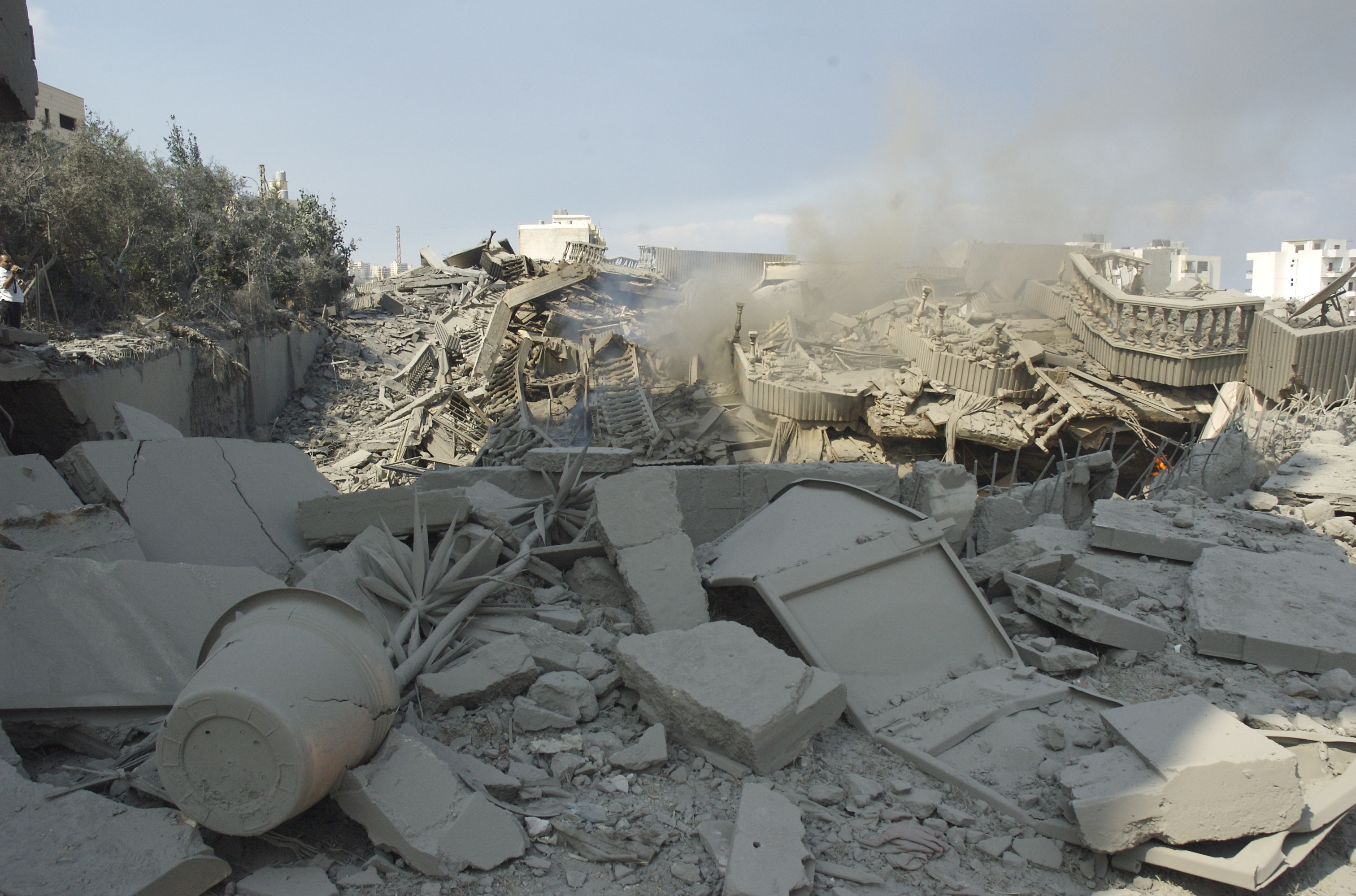
Today, the Stanford International Human Rights and Conflict Resolution Clinic (IHRCRC) in conjunction with the Global Justice Clinic (CJC) at NYU School of Law released a report entitled “Living Under Drones: Death, Injury, and Trauma to Civilians From US Drone Practices in Pakistan.” The result of nine months of independent and intensive research, this report seeks to answer the question of “whether, and to what extent, drone strikes in Pakistan conformed to international law and caused harm and/or injury to civilians.”
The report contains four principle findings:
“First, while civilian casualties are rarely acknowledged by the US government, there is significant evidence that US drone strikes have injured and killed civilians…from June 2004 through mid-September 2012, available data indicate that drone strikes killed 2,562-3,325 people in Pakistan, of whom 474-881 were civilians, including 176 children.”
“Second, US drone strike policies cause considerable and under-accounted-for harm to the daily lives of ordinary civilians, beyond death and physical injury. Drones hover twenty-four hours a day over communities in northwest Pakistan, striking homes, vehicles, and public spaces without warning. Their presence terrorizes men, women, and children, giving rise to anxiety and psychological trauma among civilian communities. Those living under drones have to face the constant worry that a deadly strike may be fired at any moment…The US practice of striking one area multiple times, and evidence that it has killed rescuers, makes both community members and humanitarian workers afraid or unwilling to assist injured victims. Some community members shy away from gathering in groups…out of fear that they may attract the attention of drone operators… Some parents choose to keep their children home, and children injured or traumatized by strikes have dropped out of school.”
“Third, publicly available evidence that the strikes have made the US safer overall is ambiguous at best…The number of ‘high-level’ targets killed as a percentage of total casualties is extremely low–estimated at just 2%. Furthermore, evidence suggests that US strikes have facilitated recruitment to violent non-state armed groups, and motivated further attacks…’drones have replaced Guantánamo as the recruiting tool of choice for militants.’”
“Fourth, current US targeted killings and drone strike practices undermine respect for the rule of law and international legal protections and may set dangerous precedents.”
The report also reminds us that the US government currently defines a “militant” simply as any adult male. For this reason, the number of civilians killed may actually be much higher than official numbers indicate. In light of this fact, this report urges “journalists and media outlets [to] cease the common practice of referring simply to ‘militant’ deaths, without further explanation.”
This report also includes three “from below” accounts of what it was like to experience a drone attack. I include excerpts from one of those accounts, which describes the drone attack that occurred on March 17, 2011, below:
“On the morning of March 17, 2011, the US deployed a drone to fire at least two missiles into a large gathering near a bus depot in the town of Datta Khel, North Waziristan. To this day, US officials publicly insist that all those killed were insurgents. That position, however, is contradicted by a range of other sources, including the Pakistani military, an independent investigation by the Associated Press,..and the testimony of survivors…
According to those interviewed…some 40 individuals gathered in Datta Khel town center. They included important community figures and local elders, all of whom were there to attend a jirga–the principle social institution for decision-making and dispute resolution…Four men from a local Taliban group were also reportedly present, as their involvement was necessary to resolve the dispute effectively…
At approximately 10:45 am, as the two groups were engaged in discussion, a missile fired from a US drone hovering above struck one of the circles of seated men…Several additional missiles were fired…In all, the missiles killed a total of at least 42 people.
Khalil Khan, the only son of Malik Hajji Babat, one of the khassadaras present at the jirga, was in the Datta Khel bazaar when he heard about the strike…[He] immediately went to the [bus] depot to try to find his father. When he arrived at the scene of the strike, he found injured victims and the bus depot in flames. Unable to identify the body parts lying on the ground, all Khalil Khan could do was ‘collect pieces of flesh and put them in a coffin.’ Idris Farid, who survived the strike with a severe leg injury, explained how funerals for the victims of the March 17 strike were ‘odd and different than before.’ The community had ‘to collect [the victims’] body pieces and bones and then bury them like that,’ doing their best to ‘identify the pieces and the body parts’ so that the relatives at the funeral would be satisfied they had ‘the right parts of the body and the right person.’
Upon reading this account, I was struck by the similarities between Khalil Khan’s experience and those who lost loved ones on 9/11: an ordinary morning filled with people going about their ordinary business ripped to shreds by sudden violence erupting out of a sky that gave no warning; dazed people frantically searching for loved ones; bodies torn to pieces; bodies never recovered.
I was also struck by the fact that, although I have heard the stories of countless 9/11 survivors, I had never before heard the voice of even one survivor of a US drone attack.
Maybe we shouldn’t expect the United States government to remember, or even learn the names of those civilians it kills. As US general Tommy Franks notoriously quipped in 2002, “we don’t do body counts.”
But shouldn’t the church? After all, the memory of a dead body is central to Christian faith. Catholics gather each Sunday to retell and remember the story of Jesus’ violent murder at the hands of the Roman Empire. Jesus’ dying body hangs on crucifixes in every Catholic church and in many Catholic homes. We take Jesus’ body into our bodies when we receive the Eucharist.
As I’ve argued before, “Christians should not only remember the ‘victims of history,’ those whom history so often forgets, but also we should mourn them.” I think about all the times I have heard us pray at mass for “our soldiers killed in battle.” But I have never heard us pray for those we kill–not even when they are innocent.
What would happen if we prayed for Khalil Khan’s family in mass this Sunday? If we prayed for all the Pakistani, Yemeni, and Afghan children too traumatized to play outside? If we picked even one Pakistani woman eliminated by US firepower and said her name aloud? If we prayed for the Pakistani communities ripped to shreds by the misguided violence done in our name?
My hope this morning is that, by becoming a church that does body counts, we will become a church in which all bodies count. In so doing, may we more truly become the Body of Christ crucified.


Leave a Reply to Chris SullivanCancel reply