
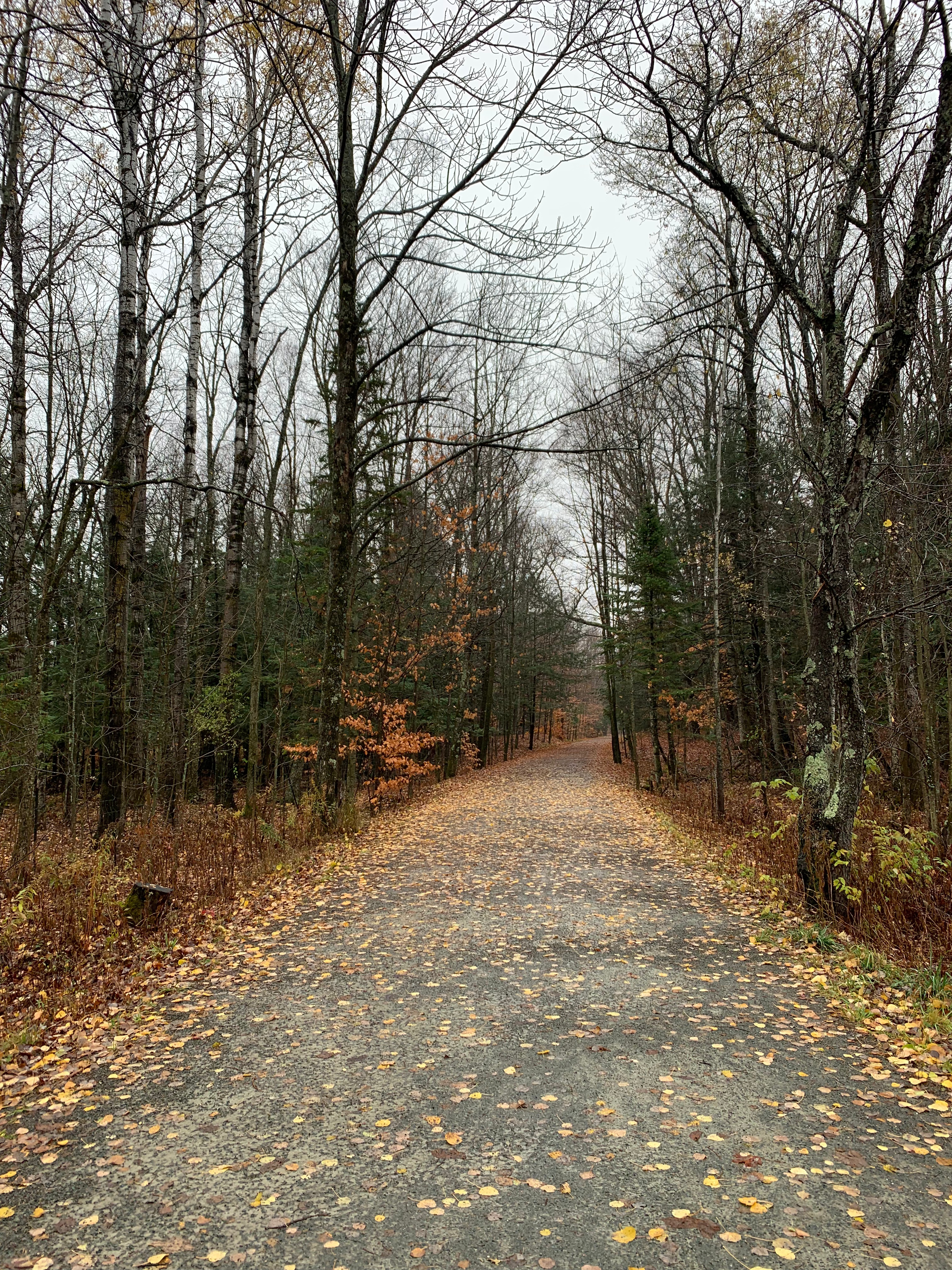
I am part of a community of practice called “Food, Faith and Farming”. These friends helped me think through the ideas around liminal space and gardening. I credit them for their wisdom.
The season of advent is one I look forward to every year. In the dreariness of late November into December in the northern hemisphere, this liturgical season reminds me to stop, open my eyes, open my ears, wait and watch. Ironically, I am not one who loves waiting. I work fast, I move fast and like destinations and results. Perhaps I am drawn to the season of advent, because my body longs for what womanist theologian Tricia Hersey (2022) artfully says: “Rest is anything that slows you down enough to allow your body and mind to connect in the deepest way”.1 Advent arrives and beckons me to stop and slow down. Advent is liminal space.
This past fall, I started thinking about the concept of liminal space. It is transitional, temporary, ambiguous and uncertain. There is fear associated with uncertainty. A 2024 study showed that the “negative attitude toward uncertainty is associated with poor mental health and that certainty seeking can lead to accepting meager rewards and low-quality information… having a negative attitude on uncertainty contributes to inefficiency, anxiety, and extremism.”2 I started to wonder if we could look at liminal space, and uncertainty, differently, and what I found was an invitation, not just for myself, but for the Church. Join me in this advent reflection, filled with expectancy and hope of what it would like to embrace liminal space as a sacred practice.
Liminal space can be thought of as a threshold. Something lies ahead, and liminal space invites us to discern what that might be. Think of a garden. Life is abounding in the garden and it is also filled with the not yet. There is so much in-between, so many thresholds: we are between planting and sprouting, leafing and fruiting, fruiting and harvesting. The garden invites us to stop, observe, listen and wait. There is life that is seen and unseen, above ground and below ground. The eco-system is working incredibly hard, and yet, it invites us to participate in a slow and intentional way. We are dependent upon creation, we are part of the community of creation. She takes care, she gives care.
The garden also invites human intervention: watering, weeding, pest cohabitation, amending soil. Climate change dictates that human intervention be incredibly intentional. Changes in precipitation require measured watering. The increase of invasive non-indigenous species requires weeding and problem-solving. The increase of insects requires some pest control, and even more pest cohabitation. In an urban garden, squirrels are dehydrated and malnourished, so we net tomatoes, while perhaps leaving a plant for the squirrels. Soil mistreatment requires amendments and nutrients. The garden as liminal space invites us to participate, participation born out of listening and observing, responding to the request at hand: water me, weed me, net me, amend me. Though we can intervene, the ecosystem leads, not the other way. There is serious danger if we interrupt, slow down or accelerate the process in a way that is contrary to what the garden is asking.
In my part of the world, the gardening season is over, snow is starting to cover the ground, and dormancy is settling in. The invitation is to enter advent liminal space with a gardener’s posture: present to the now, slowing down, paying attention, looking, and listening.
There is a quiet to liminal space, a slowness.
There is freedom in the uncertainty: I cannot control it.
It is a place for anticipation and discernment: what is happening? What is on the horizon? What is the invitation?
I believe there is an invitation to the Church to embrace this advent liminal space, perhaps even seek it out. In the age of anxiety to extremism and the yearning for certainty, there is wisdom to be found in the slowness of the garden. A wisdom that is born out of the knowledge that we are part of the community of creation, dependent upon her, she who gives great care. She invites us into the NOW filled with anticipation and expectancy, resting in between wonder and discomfort.
Isaiah 40:3 A voice of one calling: “In the wilderness prepare the way for the Lord; make straight in the desert a highway for our God.”
- Hersey, T. (2022). Rest is resistance: A Manifesto. Little, Brown Spark, p.13. ↩︎
- Alquist, J. L., & Baumeister, R. F. (2024). Learning to love uncertainty. Current Directions in Psychological Science, 33(6), 355–360. https://doi.org/10.1177/09637214241279539 ↩︎

Leave a Reply