
A couple of weeks ago, I attended a seminar focused on interfaith teaching. At one point, the facilitator emphasized the importance of both change agents, those who seek to innovate or transform, and tradition agents, those who preserve and transmit long standing beliefs and practices, in service of the common good. Most often, I operate as the former, a firm believer in remaining open to and taking seriously new knowledge to refine my religious and ethical perspectives. In the last few days, however, the role of tradition agent has been heavy on my mind.
I was born and raised in the Christian Reformed Church (CRC), a Protestant, Calvinist Christian denomination with roots in the Dutch Reformed Church. About 15 years ago, I stopped attending CRC churches and became a regular at Episcopal congregations instead. This change partially reflected my growing appreciation for ritual and more liturgical Christian traditions as well as an increasing unease with the CRC’s more conservative stance on many social issues.1 Though I no longer participate in the CRC community, it has profoundly shaped how I understand Christianity and I remain proud of a few of its distinctive features. For one, I appreciate the CRC’s multinational character; it is a denomination that operates across borders, with member churches in both the U.S. and Canada. Denominations that exist beyond a single nation’s border seem, to me, to be more reflective of the global nature of Christianity. Second, the CRC has traditionally emphasized the importance of critical thinking and knowledge in service to God. This is most evident in the deep value it places on a robust Christian education, one that is both intellectually demanding and deeply faithful. Calvin University (formerly Calvin College), an educational institution of the CRC and my alma mater, captures this commitment well, describing itself as “a Christian academic community dedicated to rigorous intellectual inquiry.”2 In my own experience, a Christian education involves substantial engagement with secular disciplines and serious engagement with diverse perspectives.3
Though I haven’t been active in a CRC church for many years, I assumed that regardless of other changes to the denomination, these two foundational aspects would remain. In the wake of Synod 2025, the annual general assembly of the Christian Reformed Church in North America held from June 13-19, I am no longer confident. While the multinational character of the CRC does not appear to be in imminent danger, the robust intellectual character of the CRC does with its latest decision regarding The Banner, the official magazine of the CRC. At Synod 2025, delegates decided that
in presenting issues pertinent in the life of the church, The Banner will no longer show ‘diverse’ positions but only positions held by the denomination. And permitting people to voice views that others might find unacceptable is also struck from the previous mandate, established by Synod 2015.4
This revision represents a fundamental rethinking of the magazine.5 According to The Banner’s editor Shiao Chong, “the historic vision of The Banner is a forum of multiple voices for the denomination…the second vision [advanced by Synod 2025] is that of The Banner representing the singular voice of the institution.”6 While this decision only directly impacts The Banner, dissenting delegates have pointed to larger implications. Ben Wimmers, for one, warned that “if we move in this direction that restricts and constricts, we’re moving into an intellectual cul-de-sac.”7 I, too, worry that these changes to The Banner signal a troubling transformation within the CRC, especially to its distinctive understanding of Christian education.
As I process this, I keep coming back to the idea of tradition agent, one who preserves and transmits long-standing beliefs and practices. Such work seems urgently needed in the CRC at this juncture and I hope is happening. Yet, I keep asking myself: Could I contribute to those efforts? Do I have any standing? Though my roots are in the CRC, I have not been an active congregant for many years and these decisions are not being made on my behalf but rather for current members. While various Christian denominations enact our common faith in ways that I find troubling, this latest shift in the CRC hits particularly hard. The Banner’s editor responded by resigning his position in protest; all I feel is grief – grief at the change and grief at my estrangement from the religious community of my birth.8
Notes:
- While the CRC has historically leaned conservative, in the last couple of years, it has adopted increasingly hardlined positions on, among other things, LGBTQ+ questions, prompting a number of congregations to disaffiliate. For more on this, see: Megan Fowler, “Founding Congregation to Exit Christian Reformed Church,” Christianity Today, February, 13, 2025, https://www.christianitytoday.com/2025/02/crc-split-lgbtq-reformed-grand-rapids-first-church/
- Calvin University, “Who We Are,” accessed June 25, 2025, https://calvin.edu/about/who-we-are.
- This may be a minority perspective as “Christian education” is a broad umbrella term which also includes educational institutions that are deeply skeptical of secular disciplines and privilege uniformity of perspective.
- Gayla R. Postma, “The Banner’s Mandate Curtailed,” The Banner, June 19, 2025, https://www.thebanner.org/news/2025/06/the-banners-mandate-curtailed.
- It also seems to be a decision made in relative haste without careful consideration. In contrast, “When Synod 2014 considered changing The Banner’s mandate, it appointed a study committee to look at it for a year and report back. With that year of study and consideration, it came back with a report and decision.” Sarah Heth Sundt, “Being Your Denominational Magazine: Responding to Synod 2025’s Banner decisions,” The Banner, June 25, 2025, https://www.thebanner.org/columns/2025/06/being-your-denominational-magazine.
- Postma, “The Banner’s Mandate Curtailed.”
- Ibid.
- Alissa Vernon, “Banner’s Editor-in-Chief Resigns ‘In Protest’” The Banner, June 25, 2025, https://www.thebanner.org/news/2025/06/banners-editor-in-chief-resigns-in-protest
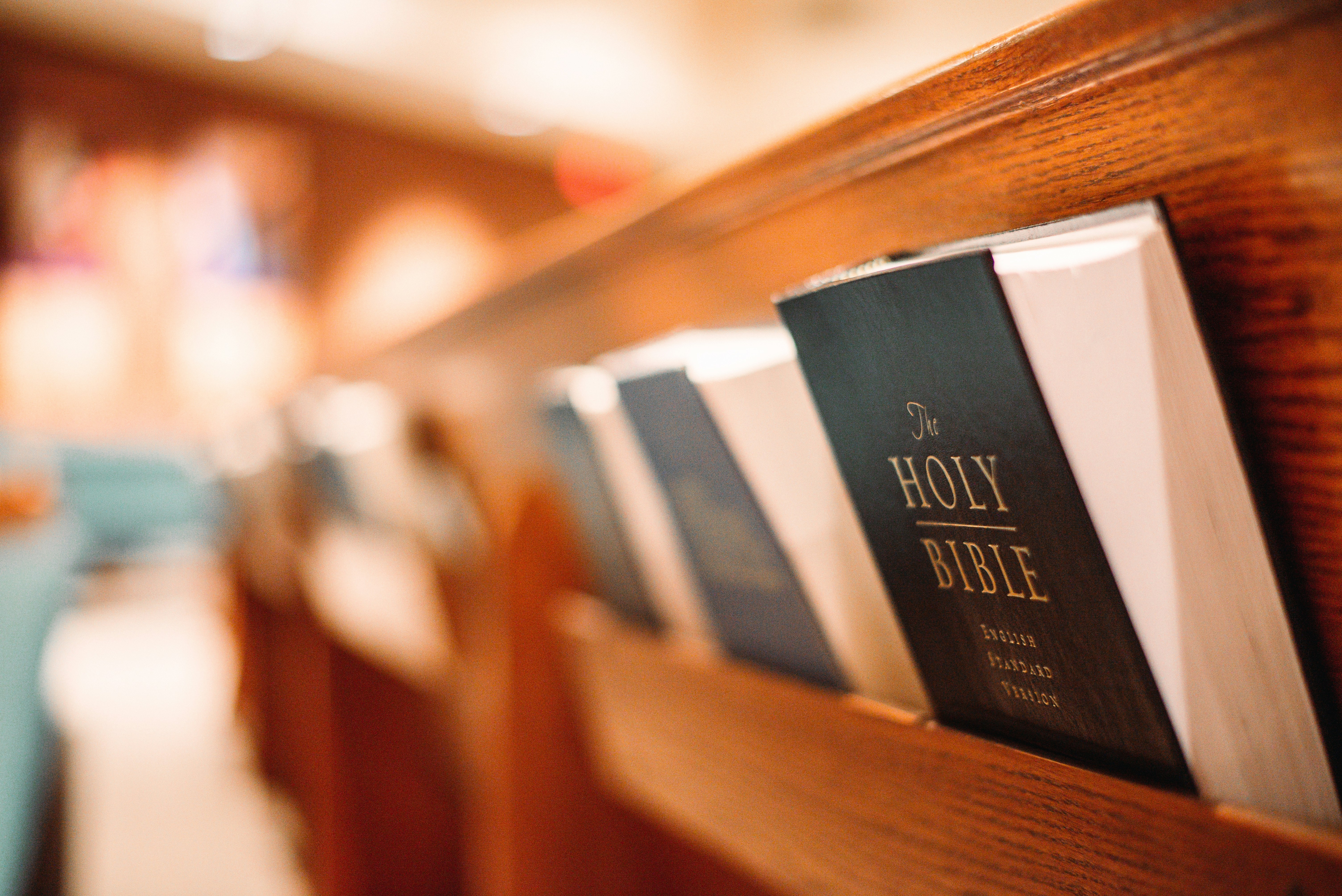
Photo by Mitchell Leach on Unsplash.


Leave a Reply